
If you’re looking to make progress in the gym, it’s essential that you learn how to plan your workouts.
The goal is to develop yourself a workout plan that supports your goals and makes working out more effective.
Finding the best combination of exercises will help you make the most out of the time you spend in the gym.
I like to think of it like I’m following a formula to make the perfect routine for myself.
Here’s everything you need to know to do just that:
Compound and Isolation Movements
The first step to making a workout plan is to understand compound and isolation movements.
Once you better understand the two, you can strategically implement them into your routine. While also using the benefits of each one to help you build more muscle.
What’s the difference between the two
It’s crucial you understand the difference between compound movements and isolation movements.
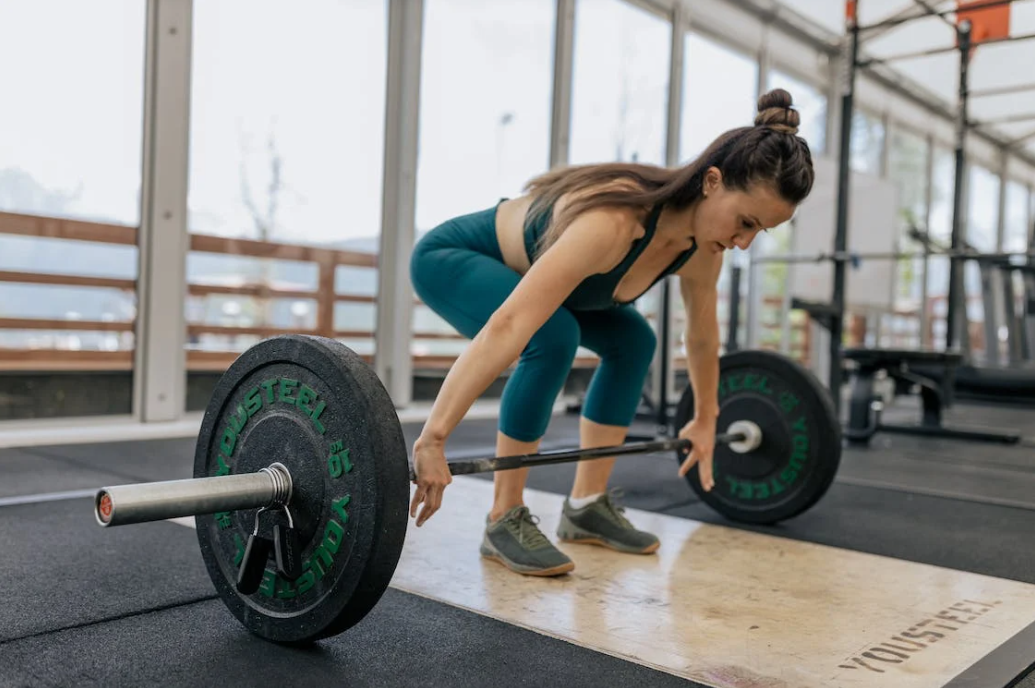
Compound movements are movements that work multiple muscles at once.
For example, squats are an example of a compound movement.
When you squat, you primarily work your quads, glutes, hips, and core along with other muscles.
Notice how many parts of the body are working at once.
Whereas isolation movements you only work one muscle group at a time.
Let’s take leg extensions as an example.
Your whole leg is supported and held in place by the machine while you’re performing this exercise.
The only singular muscle working is your quads. Your quads are isolated.
Understanding the differences between the two can help you better implement each to support maximum muscle growth.
When you should incorporate each one
When you’re planning your workout, you want to make sure you’re getting the most out of each exercise.
To do this, I recommend that you do all your compound movements at the beginning of your workout. Then, do all your isolation movements after.
This is because you want the most amount of energy for your compound movements.
Since you’re working multiple muscle groups, these exercises give you a lot of potential for muscle growth from doing just one workout.
For example, looking at squats again, you can target, grow, and strengthen your glutes, hips, and quads from just a singular exercise.
Because of this, you want to make sure your muscles aren’t fatigued before starting compound movements.
That’s why you should do the isolation movements afterwards.
Applying this strategy will help you lift extremely heavy during your compound lifts and make the most gains from your workout.
How many exercises of each should you do
When I’m planning my workouts, I like to implement 3-4 compound movements and 3-4 isolation movements per workout.
This varies depending on what I’m feeling, how strong I’m feeling, and what muscle group I’m training. However, I generally like to stay around those numbers.
I’ll give you an example of one of my current leg days right now.
This is what my glute and quad day looks like and in this order.
Compound movements:
1. Single leg lunges
2. Hip thrusts
3. Leg press
4. Single leg hip thrusts
Then I do the isolation movements:
1. Glute medius kickbacks
2. Side glute kickbacks
3. Hip abductors
4. Leg extensions
Notice how I have four compound movements and four isolation movements.
Also notice how my compound movements ALL come before my isolation movements.
This is what I think an ideal workout program should look like.
I’ve been following this routine for about 2 months now and I believe it’s given me the most progress I’ve seen since I started lifting.
How many reps and sets should you do
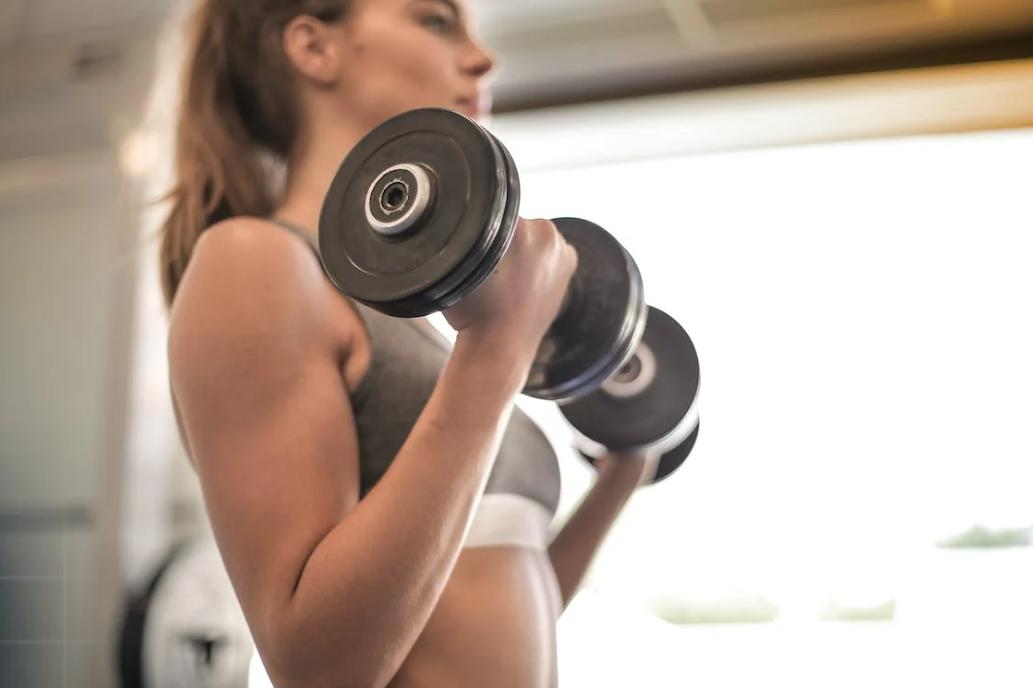
The number of sets and reps you do depends a lot on your goals.
The general rule of thumb for reps is:
5-7 reps if you’re training for strength
8-12 reps if you’re training for hypertrophy (muscle growth)
15+ reps if you’re training for endurance
Now, this varies a lot from person to person.
I generally find that sticking to the middle range of 8-12 reps works best for building muscle.
This is the rep range I stick to and has helped give my muscle the best shape while also toning them.
As for the number of sets, I recommend doing 3-4 sets per exercise. I do 4 sets in almost every exercise but occasionally I’ll limit it to only 3.
Sets and reps for compound vs isolation exercises
For compound movements, it’s best to keep the reps on the lower end of the 8-12 rep range while keeping the weight heavier.
Because compound exercises are so good for building muscle, you want to lift as heavy as you can on these while staying within your goal rep range.
This will help you put on the most muscle and get the most benefits out of a workout.
For isolation movements, this is where it’s better to train at the higher end of your target rep range.
Isolation movements give you the best opportunity to train for hypertrophy and take the muscle to failure.
Failure is when you’re muscle physically cannot do any more reps for the set.
People don’t realize how difficult it is to actually train to failure on an exercise.
Your mind wants to give out much earlier than your muscle actually does.
That’s why it’s much easier to train to failure on a singular muscle than it is to try and train to failure on multiple muscles at once.
Start planning your workouts
Applying these strategies can help you plan workouts that support the right muscle growth for your goals.
Working out is never a one size fits all, so you’ll need to experiment with what works for you.
Hopefully, now, when you go to plan your workouts, you’ll have a good foundation and a good idea of where to start.
[convertkit form=6036486]